As a general rule, most UK universities accept up to 2 years of gap for undergraduate courses and up to 5 years for postgraduate programs, but with a strong Statement of Purpose (SOP), relevant experience, and proper supporting documents, universities may accept extended gaps of 10, 15, or even 20 years, especially for mature students and professional applicants.
Worried that your study gap might stop you from studying in the UK in 2026? You’re not alone, and the good news is, a study gap is not a deal-breaker for UK universities. Every year, thousands of international students with gap years successfully secure admissions and student visas, even with long academic breaks.
In fact, studies conducted by American colleges have shown that the average GPA of those who have taken a gap year is significantly higher than the average GPA of those who have not. This suggests that a gap year might even benefit your academic performance in the long run.
In this guide, you’ll learn how universities evaluate gap years, what gap durations are considered safe, which reasons are widely accepted, how study gaps impact your UK student visa, and, most importantly, how to justify your gap effectively to maximize your admission chances.
What Is a Study Gap? (Meaning for UK Admissions)
A study gap is the time between completing your last academic qualification and starting the next one. In UK admissions, it is counted from your final result date to your course start date in the UK, even if a 1-year break is officially considered a study gap.
Example: Bachelor’s completed in 2020, Master’s starting in 2026 = 6-year study gap.
UK universities assess study gaps contextually, not negatively. According to UCAS trends, tens of thousands of students defer or pause their education every year, making study gaps a normal part of the UK system. What matters most is how the gap was used, not just its length.
Commonly accepted gap reasons include full-time or part-time work, internships, professional training, skill-based courses, exam preparation, entrepreneurship, financial or family responsibilities, and medical or health recovery.
All applicants must declare and justify their study gap with a strong SOP and documentary proof (experience letters, certificates, medical reports, etc.). While undergraduate courses usually expect shorter gaps, postgraduate and mature applicants receive greater flexibility, especially when the gap adds academic or career value.
How Many Years Gap is Accepted for Study in the UK?
UK universities evaluate study gaps based on academic level, course type, and the reason for the gap. The focus is on whether the gap was productive, purposeful, and well-documented, rather than the exact number of years. Generally, undergraduates have stricter limits, while postgraduates enjoy greater flexibility, especially if the gap involves work, skill-building, or professional growth.
How Much Gap Is Acceptable for Study in the UK After 12th (Bachelor’s)?
For undergraduate courses, most UK universities accept a study gap of up to 2 years after Class 12, HSC, or A-Level completion. Some universities, like University College Birmingham, may accept up to 3–5 years if the applicant provides strong justification, supporting documents, and high English proficiency scores.
Longer gaps usually require foundation or preparatory courses, and the applicant must clearly explain how the gap was spent, such as through work experience, volunteering, internships, or skill development. Without proper justification, gaps beyond 2–3 years may reduce admission chances for undergraduate programs.
How Much Study Gap Is Acceptable in the UK for a Master’s?
For postgraduate programs, UK universities are significantly more flexible. Typically, a gap of 1–5 years is widely accepted, with standard documentation like experience letters or SOPs.
Some universities, including Coventry, Ulster, and Bangor, may accept gaps up to 10 years if supported by detailed evidence of work, business, research, or professional development. Even gaps of 10–15 years can be considered in exceptional cases, particularly for mature students or professionals who can demonstrate career growth or relevant achievements during the break.
In all cases, the quality and clarity of the explanation matter more than the gap itself, making documentation and narrative critical for acceptance in both undergraduate and postgraduate applications.
What Are the Acceptable Reasons for Study Gaps in the UK?
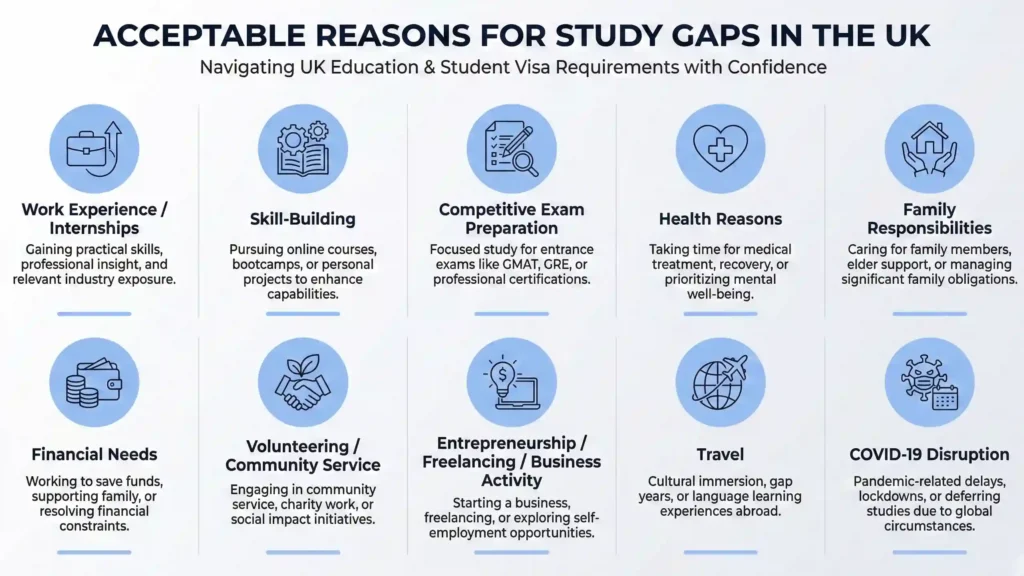
UK universities consider a variety of valid reasons for study gaps. Each reason must be well-documented and clearly explained in your application or SOP to demonstrate how the gap contributed to personal, academic, or professional growth.
Work Experience / Internships
Gaining professional experience or completing internships shows practical skills, industry exposure, and career readiness. Universities value applicants who have applied their learning in real-world settings.
Skill-Building (Short Courses, Certifications, Workshops, Online Learning)
Engaging in certifications, online courses, or workshops demonstrates initiative, continuous learning, and subject mastery relevant to future studies.
Competitive Exam Preparation (Government/Civil Service Exams)
Preparing for government, civil service, or professional exams is a valid gap reason, reflecting dedication, discipline, and long-term career planning.
Health Reasons (Physical or Mental Health Recovery/Treatment)
Taking time off for health recovery is accepted when supported by medical documentation, showing responsibility and transparency.
Family Responsibilities (Caregiving, Family Crisis)
Caring for family members or managing emergencies is a recognized reason, highlighting maturity and personal responsibility.
Financial Needs (Earning/Saving to Fund Study or Support Family)
Working to save for tuition or family support demonstrates commitment to education and the ability to manage financial responsibilities independently.
Volunteering / Community Service
Participating in social work or community projects reflects civic engagement, leadership, and personal growth during the gap period.
Entrepreneurship / Freelancing / Business Activity
Running a business, freelancing, or pursuing entrepreneurial ventures shows initiative, self-motivation, and transferable skills for future studies.
Travel (When Framed as Growth / Global Exposure)
Travel for cultural exploration or global exposure is accepted if it contributes to personal growth, learning, or international awareness.
COVID-19 Disruption (Specifically Referenced for 2020–2022)
Breaks caused by the pandemic are widely recognized. Universities understand delays due to lockdowns, remote learning challenges, or health risks during this period.
Which Universities Accept Gap Years in the UK (Best for Bangladeshi Students)
These universities combine high gap-student acceptance, quality education, and strong career outcomes, making them ideal for applicants resuming studies after a break.
| University | UG Gap | PG Gap |
| University of Strathclyde | 3-5 | 3-5 |
| Swansea University | 2 | 5 |
| Ulster University | N/A | 10 |
| Bangor University | 2 | 10 |
| Coventry University | 2 | 10 |
| Cardiff Metropolitan University | 2 | 5 |
| Keele University | 2 | N/A |
| University of Chester | 5 | 5+ |
| University of South Wales | N/A | 5 |
| University of Derby | 5 | 10 |
| University of Hertfordshire | N/A | 5-7 |
| Edinburgh Napier University | 2 | N/A |
| Solent University | N/A | 5 |
| London South Bank University | N/A | 10 |
| University of Wales Trinity Saint David | N/A | 5 |
| Roehampton University | <2 | <5 |
| De Montfort University | 2 | 7+ |
| Ravensbourne University London | N/A | Long |
*Information may change at any time; please check the university’s website for accurate data.
What Are the Impacts of Study Gaps on UK University Admission?
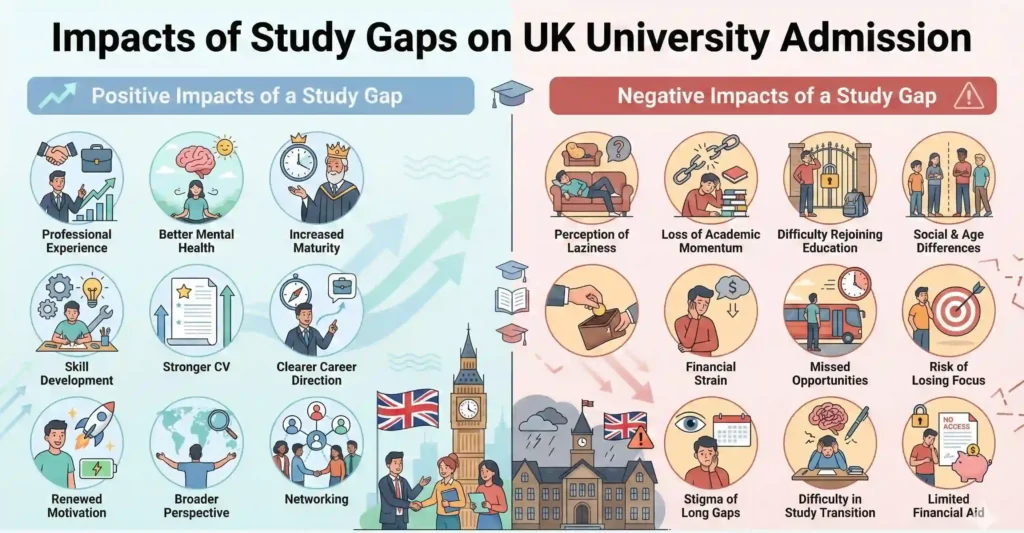
Study gaps can have both positive and negative effects on your application to a UK university. While it can provide opportunities for personal development and work experience, it can also be a source of concern for admissions committees.
Positive Impacts of a Study Gap:
- Professional Experience: A gap can improve employability by gaining relevant work experience and enhancing skills.
- Better Mental Health: Time off helps reduce academic stress, improving focus and well-being.
- Increased Maturity: Personal reflection helps you make more informed decisions in life and career.
- Skill Development: A gap allows you to learn new skills (technical, language, leadership) that enhance your CV.
- Stronger CV: Meaningful work or volunteering during the gap shows initiative and real-world experience.
- Clearer Career Direction: A gap can help clarify future studies or career choices.
- Renewed Motivation: Time off can reignite your passion for further education.
- Broader Perspective: Traveling or working expands your worldview, enriching your academic experience.
- Networking: Gap activities can help you build valuable professional and academic connections.
Negative Impacts of a Study Gap:
- Perception of Laziness: Long, unexplained gaps may raise concerns about commitment or dedication from universities or employers.
- Loss of Academic Momentum: A gap can make it hard to adjust back to the academic routine, affecting focus and performance.
- Difficulty Rejoining Education: Some universities limit or reject applicants with extended gaps unless there’s a significant justification.
- Social & Age Differences: Returning after a long gap may cause age-related discomfort or social disconnect with younger peers.
- Financial Strain: Managing finances during a gap, especially while saving for tuition, can be challenging.
- Missed Opportunities: Taking a gap may cause you to miss scholarships, fellowships, or other academic opportunities with strict timelines.
- Risk of Losing Focus: Time away from academics might reduce your drive and enthusiasm for studies.
- Stigma of Long Gaps: In some cultures or academic settings, long gaps can carry a stigma that impacts your reputation.
- Difficulty in Study Transition: Shifting back from a casual lifestyle to intense studying can be tough.
- Limited Financial Aid: Some scholarships or financial aid programs have strict eligibility criteria that don’t accommodate long gaps.
What Is the UK University Gap Year Policy?
UK universities generally accept students who have taken a gap year, but the length, reason, and type of course have a significant impact on admission. Most institutions welcome a gap of 1-2 years, while longer breaks – up to 5-10 years – are considered if supported by strong reasoning and documentation.
Reasons such as work experience, internships, volunteering, skill-building, or health recovery are viewed positively, while unexplained gaps can be a cause for concern. Some universities allow deferred entry, allowing students to delay entry for a year to travel, earn money, or gain experience, but policies vary by course and institution.
Applicants must clearly justify their gap, show how the period has enhanced academic preparation, skills, or professional growth, and provide supporting evidence such as SOPs, letters of experience, certificates, or project documents. Ultimately, the UK follows a flexible, case-by-case approach, assessing productivity and purpose over the exact length of the gap.
Is a Study Gap Acceptable for a UK Student Visa, and Does It Have Any Effect?
Yes, a study gap is generally acceptable for a UK Student Visa, but it does not automatically guarantee approval. UK Visas and Immigration (UKVI) assesses whether applicants demonstrate genuine academic intent, readiness, and financial capability.
An unexplained or poorly documented gap can raise concerns about your seriousness and preparedness, which may delay or jeopardize your visa application. Conversely, a well-justified and documented study gap that aligns with your academic and career goals can actually strengthen your application and improve your chances of approval.
Key factors UKVI reviews include:
- Purpose of study: Explain how the gap contributed to your skills, experience, or personal growth.
- Academic background: Provide transcripts, certificates, or proof of previous qualifications.
- Financial proof: Demonstrate the ability to cover tuition and living costs through bank statements or sponsor letters.
- Gap justification: Submit supporting evidence such as work letters, internship certificates, volunteering records, or medical documents.
How to Confidently Justify and Cover Your Study Gap?
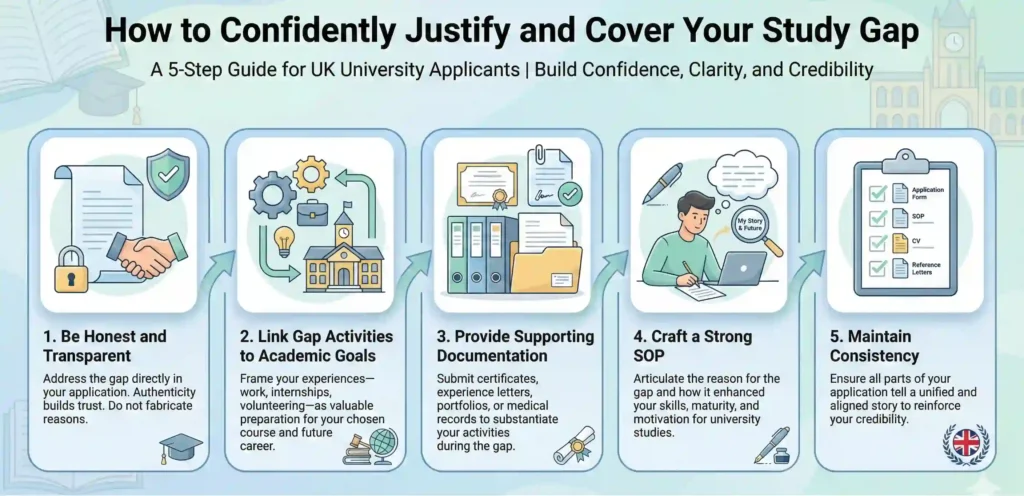
Effectively addressing your study gap is crucial for UK university admissions and visa approval. The key is to demonstrate that your gap was purposeful, productive, and aligned with your academic and career goals.
Be Honest and Transparent: Clearly explain the reason for your gap, whether it was work, internships, skill-building, competitive exam preparation, health issues, or family responsibilities. Concealing or exaggerating details can harm your application.
Link Gap Activities to Academic Goals: Show how your gap experiences, such as employment, volunteering, short courses, certifications, or entrepreneurship, enhanced relevant skills and prepared you for your chosen program. Travel or global exposure can also be positioned as personal and cultural growth.
Provide Supporting Documentation: Strengthen your case with verifiable proof such as employment letters, internship certificates, course completions, project reports, medical records, or reference letters. Evidence makes your narrative credible to both universities and UKVI.
Craft a Strong SOP: Your Statement of Purpose should outline the gap reason, highlight skills and experiences gained, and explain how the break enhances your academic readiness. Maintain a confident and positive tone, emphasizing resilience, growth, and preparedness.
Maintain Consistency: Ensure your CV, SOP, and visa documents reflect the same timeline and activities. A cohesive, well-documented explanation maximizes acceptance chances at both admission and visa stages.
What Are the Documents Required to Explain a Study Gap?
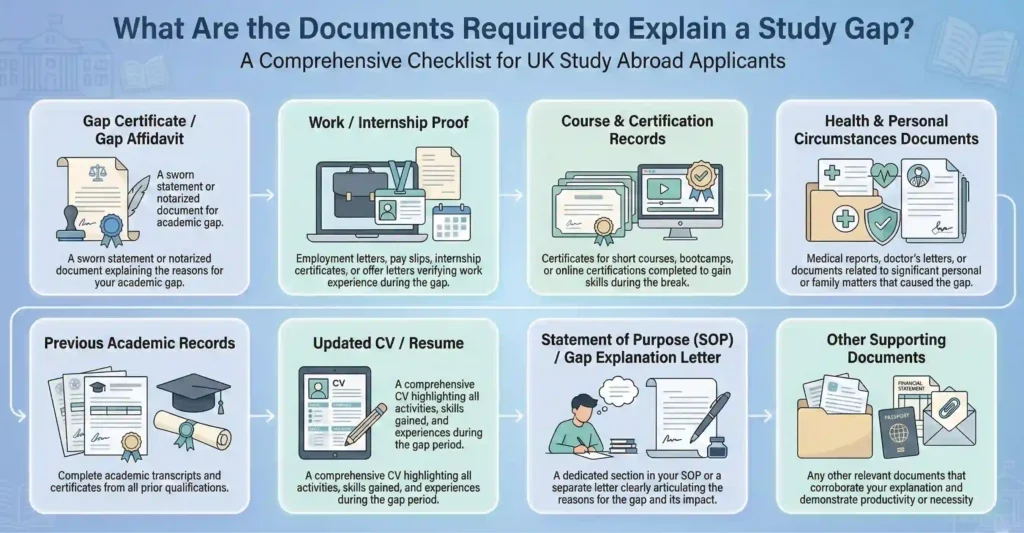
To justify a study gap for UK university admissions and visa purposes, you need well-organized and verifiable documents that demonstrate productivity, purpose, and credibility during your break. Universities and UKVI value clear evidence over the length of the gap. Essential documents include:
- Gap Certificate / Gap Affidavit: A notarized declaration outlining the duration, reason, activities, and personal/academic details of the gap. It formally validates your timeline.
- Work / Internship Proof: Letters from employers, salary slips, or internship certificates showing roles, responsibilities, and duration, highlighting productive engagement.
- Course & Certification Records: Certificates, diplomas, enrollment receipts, or exam results from short courses, workshops, or online courses, showcasing skill development.
- Health & Personal Circumstances Documents: Medical certificates, hospital reports, or family-related documents (death, marriage, or caregiving certificates) to explain unavoidable breaks.
- Previous Academic Records: Marksheets, transcripts, degree certificates, or leaving certificates to establish your last completed qualification and align it with the gap timeline.
- Updated CV / Resume: Chronological record of academic, professional, and gap activities, including dates, roles, courses, and volunteering.
- Statement of Purpose (SOP) / Gap Explanation Letter: A compelling narrative linking your gap activities to your academic and career goals, emphasizing growth, readiness, and motivation.
- Other Supporting Documents: Any additional proof, such as travel records, business documents, NGO work, or project files, to strengthen non-traditional gap justifications.
Is There Anything That Can Influence My Decision to Take a Gap Year?
Recent data from UCAS and the British Council suggests that interest in gap years is growing. Between 2021 and 2024, UCAS deferrals are expected to increase from 28,000 to an estimated 35,000, reflecting the continued rise in the number of students delaying university.
In addition, more than 20% of UK students see gap years as a valuable option for travel, work experience, or personal development. Motivations include exploring personal interests, saving money, and taking time to reset before higher education.
What Information Should Be Identified to Avoid Application Issues?
To avoid delays or rejection in UK admissions and visa applications, ensure all information about your study gap is accurate, complete, and verifiable:
- Clear Chronology: Keep a consistent timeline (MM/YYYY–MM/YYYY) across CV, SOP, and academic records, explaining every gap in work, internships, volunteering, caregiving, or health recovery, and highlight achievements.
- Verified Documentation: Provide authentic letters, certificates, and references for all gap activities; missing or incomplete proof raises doubts.
- Link Gap to Goals: Show how each activity enhanced skills relevant to your chosen program, demonstrating purposeful alignment.
- Continuous Development: Include evidence of learning, courses, projects, or freelancing to show productivity during the gap.
- Exceptional Circumstances: Back long gaps due to health, family, or COVID-19, with proper documentation.
- Financial and Academic Preparedness: Show work earnings or training that indicate readiness to resume studies.
- Consistency Across Documents: Ensure CV, SOP, and reference letters tell a coherent story; discrepancies can harm credibility.
How Can You Bridge Your Study Gap Before Applying? (Proactive Measures)
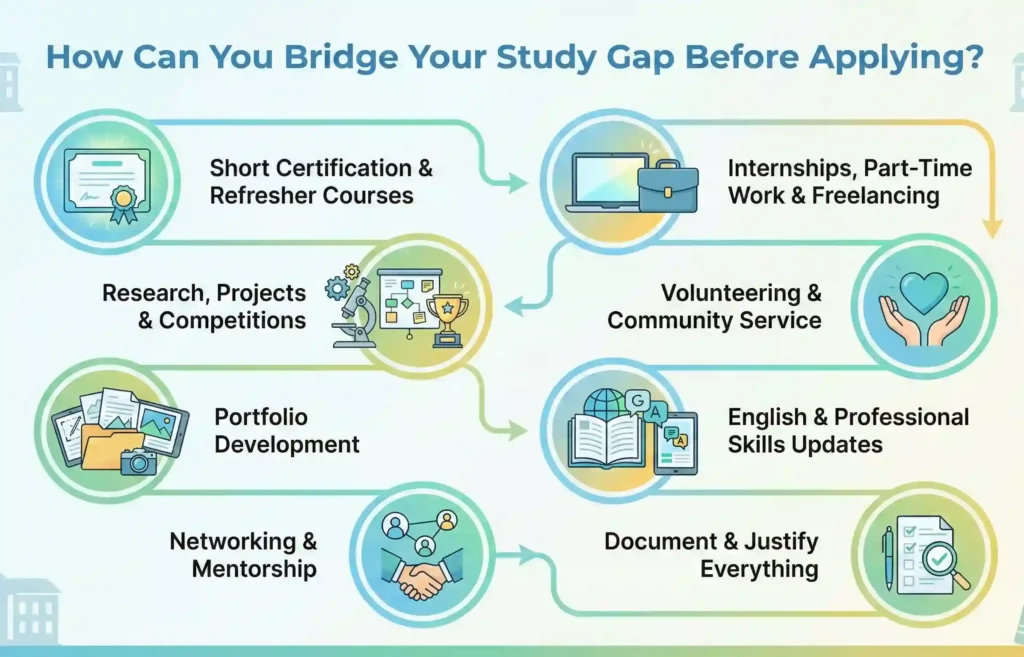
To strengthen your application after a study gap, taking proactive and verifiable steps is essential to demonstrate productivity, skills, and readiness for UK studies:
- Short Certification & Refresher Courses: Sign up for industry-relevant courses on platforms like Coursera, edX, FutureLearn, or Udemy. Choose programs that align with your intended degree, such as coding for IT, digital marketing for business, or language skills for the humanities. Certificates validate continued learning.
- Internships, Part-Time Work & Freelancing: Gain practical experience to develop teamwork, leadership, problem-solving, and industry insight. Highlight tangible results like project completion or efficiency improvements in your CV and SOP.
- Research, Projects & Competitions: Engage in academic projects, independent research, hackathons, or case competitions. These demonstrate analytical skills, creativity, and applied knowledge.
- Volunteering & Community Service: Show personal growth, social responsibility, and engagement in meaningful activities during your gap.
- Portfolio Development: For technical or creative fields, maintain a portfolio of work, publications, or coding repositories to showcase capability and readiness.
- English & Professional Skills Updates: Retake IELTS/TOEFL if outdated and use online courses or workshops to improve language, communication, or professional skills. Mention completed programs to show continuous improvement.
- Networking & Mentorship: Network with professionals, attend webinars, or seek mentorship to refine your goals and gain valuable insights.
- Document & Justify Everything: Maintain certificates, reference letters, project proof, and financial records. Include a clear explanation in your SOP linking your gap activities to your academic and career goals, ensuring credibility for both universities and UKVI.
What’s the Best Application Strategy for Students with a Study Gap?
Students with a study gap need a strategic, step-by-step approach to maximize admission and visa success. The focus is on positive gap framing, comprehensive documentation, and targeted university selection.
1. Personal Statement & SOP Strategy:
- Be honest and positive: Clearly explain your gap (health, work, volunteering, or personal development).
- Highlight activities and achievements: internships, certifications, skill-building, projects, research, or volunteering.
- Emphasize skills and learning: leadership, problem-solving, communication, and subject-specific competencies.
- Show academic readiness: short courses, refresher programs, or research projects to bridge knowledge gaps.
- Connect gap experiences to study goals: explain how your gap strengthened your motivation and prepared you for your chosen program.
2. Documentation Checklist by Gap Duration:
- 1–2 Years: SOP, basic activity proof (employment letters, certificates), academic transcripts.
- 2–3 Years: Enhanced SOP, detailed activity documentation, professional/personal references, evidence of continuous learning.
- 3+ Years: Comprehensive gap justification, multiple references, timeline with measurable outcomes, academic prep evidence (refresher courses, diplomas, portfolios).
3. University Research & Selection:
- Shortlist 8–12 universities across competitive and accessible tiers.
- Prioritize institutions with flexible gap policies and courses aligned with your career goals.
- Contact admissions offices to confirm documentation requirements and deferral/deferred entry options.
4. Timeline & Stepwise Implementation:
- 18–24 months before: Research universities and gap policies, gather preliminary documentation.
- 12–18 months before: Prepare English tests, complete certifications, or skill-building activities.
- 9–12 months before: Submit UCAS/direct applications, ensure all supporting documents are certified.
- 6–9 months before: Monitor application status, respond to university requests, and apply for scholarships.
- Upon Offer: Start the student visa process, provide financial proof, prepare for the visa interview, arrange accommodation, and pre-departure planning.
5. Key Tips for Success:
- Avoid apologizing for your gap; frame it as a productive, growth-oriented period.
- Provide specific, verifiable evidence of all gap activities.
- Link your experiences to the chosen academic program to show relevance.
- Apply to multiple universities to increase acceptance chances.
- Maintain a consistent timeline across SOP, CV, and supporting documents to avoid discrepancies.
Who Can Support You to Study in the UK with a Study Gap?
AIMS Education’s study overseas service helps students turn study gaps into strengths by crafting well-structured CVs and SOPs that clearly explain the gap with accurate reasons, supporting evidence, and a clear timeline. For students planning UK study from Bangladesh in the current admission season, AIMS also works to maximise admission and scholarship opportunities.
For students with standard or short gaps, AIMS, recognized as a leading study abroad agency in Bangladesh, ensures a strong chance of admission. For longer or unconventional gaps, AIMS provides maximum strategic support in presenting valid explanations and documentation to enhance credibility, while final admission decisions remain at the discretion of the university.
Frequently Asked Questions
Is a 15-year study gap acceptable in the UK?
Yes, a 15-year study gap can be acceptable for UK universities, but it is considered an exceptional case, usually for mature students or professionals. Admission depends heavily on:
- A strong SOP explaining how the gap was spent
- Relevant work experience, professional growth, or skill development during the break
- Proper supporting documents like experience letters, certifications, or project records
- Universities focus more on the purpose and productivity of the gap than on the exact number of years.
Is a 20-year study gap acceptable in the UK?
A 20-year gap is rarely accepted, but it is possible under exceptional circumstances, typically for experienced professionals or mature applicants. Key requirements include:
- A detailed and credible SOP explaining the gap
- Evidence of career achievements, professional experience, or relevant activities
- Strong academic readiness or refresher courses to demonstrate the capability to resume studies
- Without proper justification, such a long gap may reduce admission chances, so documentation and a compelling narrative are critical.
Is a 10-year study gap acceptable in the UK?
Yes, a 10-year study gap is generally acceptable, especially for postgraduate programs. Many UK universities, including Coventry, Ulster, and Bangor, may consider applicants with a 10-year gap if they provide:
- Detailed evidence of work, business, research, or professional development
- A strong SOP linking gap activities to academic goals
- Supporting documents such as experience letters, certifications, or project records
- The focus is on clarity, quality, and relevance of the gap activities rather than the number of years itself.